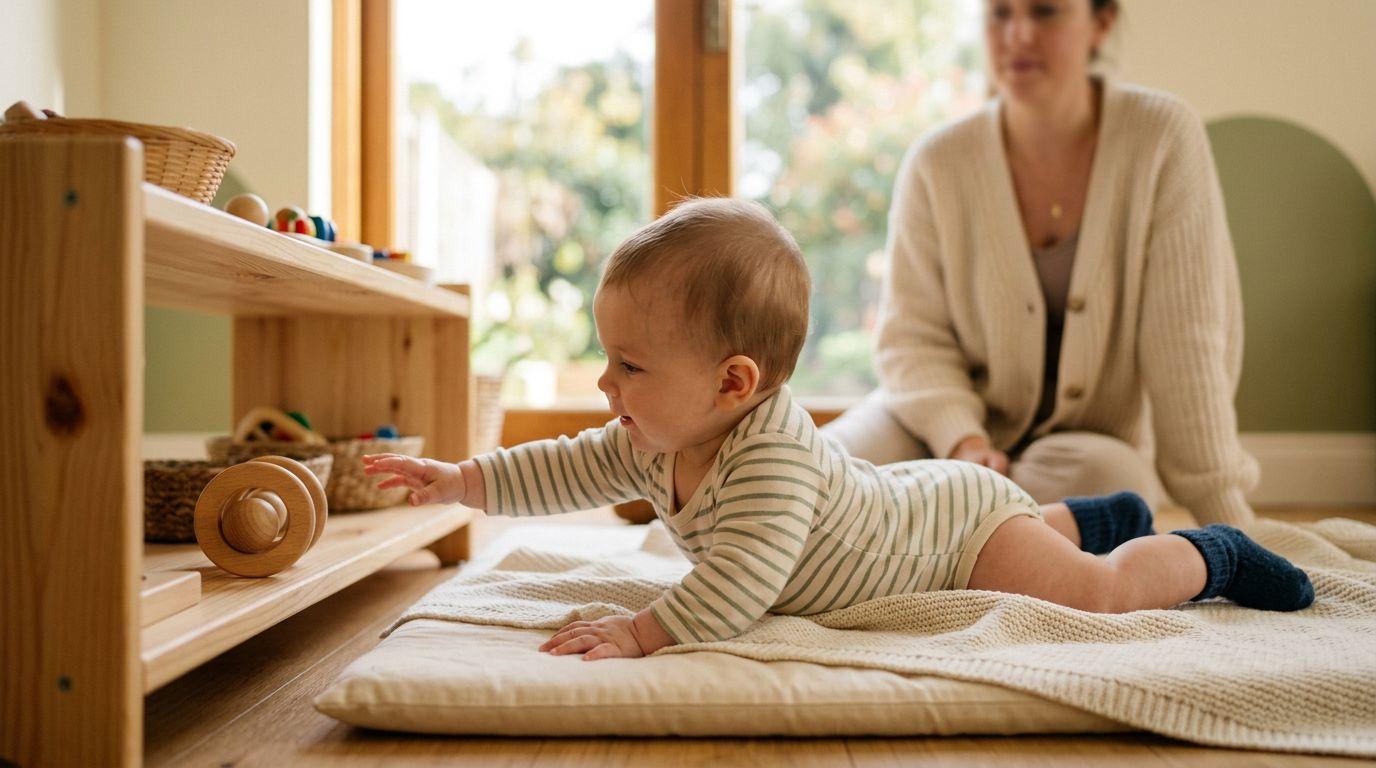
Infant6 weeks – 12 months
An attachment-led, deeply gentle infant room. We follow your baby's cues, keep nap rhythms close to home, and send daily updates so you don't miss a thing.
Teacher-to-child ratio: 1:4
Predictable rhythm. Plenty of room to breathe.
Children settle when they know what’s next. Here’s the rhythm of a typical day.
- 6:00 – 7:30 AMDrop-off & morning bottlesWe follow your home schedule for feeds and naps.
- 7:30 – 9:00 AMFloor time & sensory playMirrors, soft tracking toys, simple grasping work.
- 9:00 – 10:00 AMMorning nap window
- 10:00 – 11:30 AMTummy time, songs, outdoor stroller walks
- 11:30 – 12:30 PMLunch (purées or table food per stage)
- 12:30 – 2:30 PMAfternoon nap window
- 2:30 – 4:00 PMSensory work, lap reading, free movement
- 4:00 – 6:30 PMSnack, calm play, family pickup
What we work on at this age.
Sensory development
Mirror work, mobile tracking, texture baskets, and music to build vision, hearing, and proprioception in safe doses.
Language exposure
We narrate the day in plain language and read aloud at every nap-down. Gentle exposure to multiple home languages where families have them.
Attachment-led care
Babies are soothed by predictable people. Lead caregivers stay consistent so your baby builds real bonds, not just supervision.
Safe sleep practices
Back-sleeping, firm crib surfaces, no bumpers, no loose blankets. We follow AAP guidelines without exception.
Developmental milestones.
- Head and neck control, rolling, and pre-crawling work tracked weekly.
- First sounds, first words, and growing vocabulary noted in daily updates.
- Spoon and cup readiness; transitioning from purées to table food on your timeline.
- Object permanence, cause-and-effect, and early problem-solving with simple Montessori puzzles.
Babies move up when they're ready, not by birthday.
Most infants transition into the toddler room around 12 to 14 months — when they're walking confidently and showing readiness for the new environment. We schedule visits to the next room well before the move and you'll know about every step.
About the infant program.
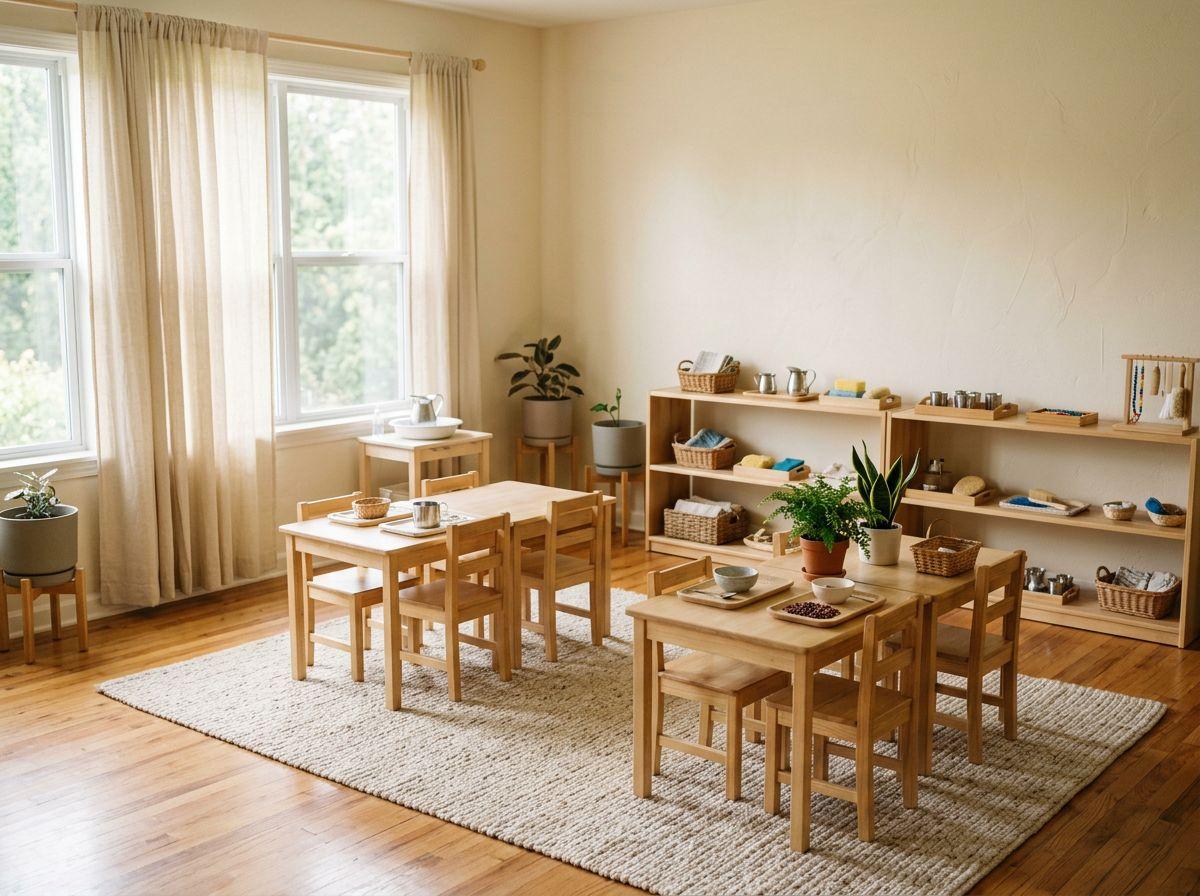
Come see Beechnut St. for yourself.
Tours are free and last about 30 minutes. Bring your little one if you can — they usually decide before you do.