Preschool3 – 4 years
The long Montessori work cycle. Pre-reading, math foundations, creative arts, and the kind of focused, self-directed work that builds the muscles for kindergarten and beyond.
Teacher-to-child ratio: 1:11
Predictable rhythm. Plenty of room to breathe.
Children settle when they know what’s next. Here’s the rhythm of a typical day.
- 6:00 – 8:00 AMDrop-off, free choice
- 8:00 – 8:30 AMBreakfast
- 8:30 – 11:30 AMLong work cycleThree uninterrupted hours of self-directed Montessori work and small-group lessons.
- 11:30 – 12:30 PMOutdoor play
- 12:30 – 1:15 PMLunch
- 1:15 – 3:00 PMQuiet rest, then specials (art, music, gardening)
- 3:00 – 3:30 PMSnack
- 3:30 – 6:30 PMOutdoor play, work cycle, family pickup
What we work on at this age.
Pre-reading
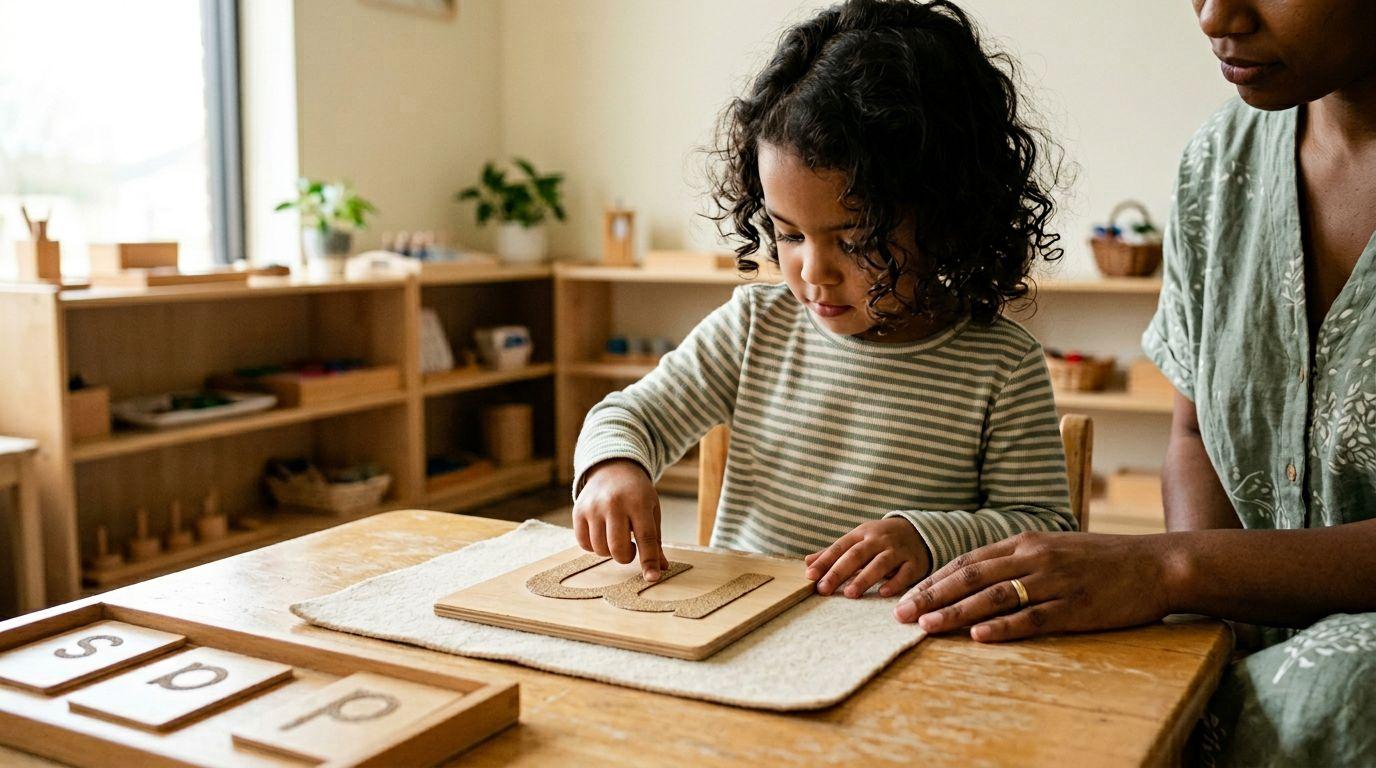
Sandpaper letters, the moveable alphabet, and phonemic awareness games. Most preschoolers leave this room reading their own name and beginning sight words.
Math foundations
Counting bars, the spindle box, the golden bead material. Concrete-to-abstract — children touch the math before they read it.
Creative arts
Painting, clay, music, drama, and gardening. Real materials, not coloring sheets.
Outdoor & garden
Daily outdoor time and a working garden bed. Children plant, water, and harvest what they later eat at lunch.
Developmental milestones.
- Recognizes letter sounds and begins blending into words.
- Counts to 100, recognizes numerals, and begins simple addition with concrete materials.
- Holds a pencil correctly and writes their own name.
- Engages in extended work without adult prompting (the ‘normalized’ child).
- Resolves small conflicts with peers using language, not action.
About the preschool program.
Come see Beechnut St. for yourself.
Tours are free and last about 30 minutes. Bring your little one if you can — they usually decide before you do.